盲肠
人体的盲肠退化,作用并不明显,而植食性的动物则有一长袋状盲肠,特别是那些不能反刍以消化纤维素食物的动物。
| 盲腸 | |
|---|---|
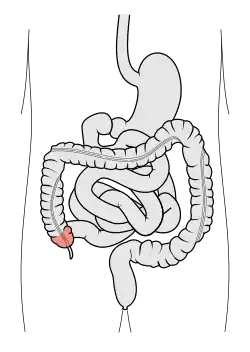 盲腸(紅色)在人體消化道的位置 | |
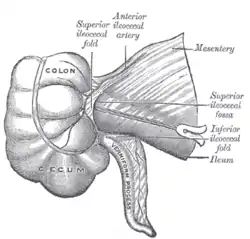 迴盲上隱窩(superior ileocecal fossa)圖解 盲腸(cecum)位於圖中左側 | |
| 细节 | |
| 发育自 | 中腸 |
| 屬於 | 大腸 |
| 系統 | 消化道 |
| 位置 | Lower right part of the abdomen. |
| 识别标示 | |
| 拉丁语 | Caecum |
| MeSH | D002432 |
| TA98 | A05.7.02.001 |
| TA2 | 2970 |
| FMA | FMA:14541 |
| 格雷氏 | p.1177 |
| 解剖學術語 | |
盲肠,即阑肠,見於羊膜動物。
在人体位于腹腔右下部,右中腹长约6到8厘米的大肠起始段结构,形如袋状。
盲肠向上延续为升结肠,下部有一孔通阑尾,同迴腸交接区的内壁有迴盲瓣,有防止大肠内含物倒流的作用。
盲肠很少发炎,所谓盲肠炎多是阑尾炎的误称。
附圖
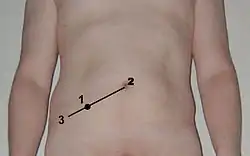 Location of McBurney's point (#1)
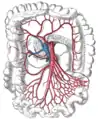 The superior mesenteric artery and its branches.
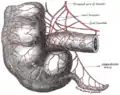 Arteries of cecum and vermiform process.
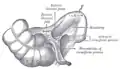 Inferior ileocecal fossa.
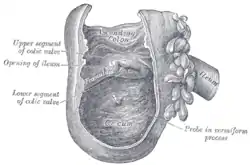 Interior of the cecum and lower end of ascending colon, showing colic valve.
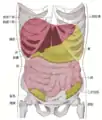 Topography of thoracic and abdominal viscera.
 盲肠的直腸鏡影像,前面箭頭部份即為迴盲瓣
参考文献
This article is issued from Wikipedia. The text is licensed under Creative Commons - Attribution - Sharealike. Additional terms may apply for the media files.